Netanyahu Defends Israel’s Military Actions as Dozens of UN Delegates Walk Out
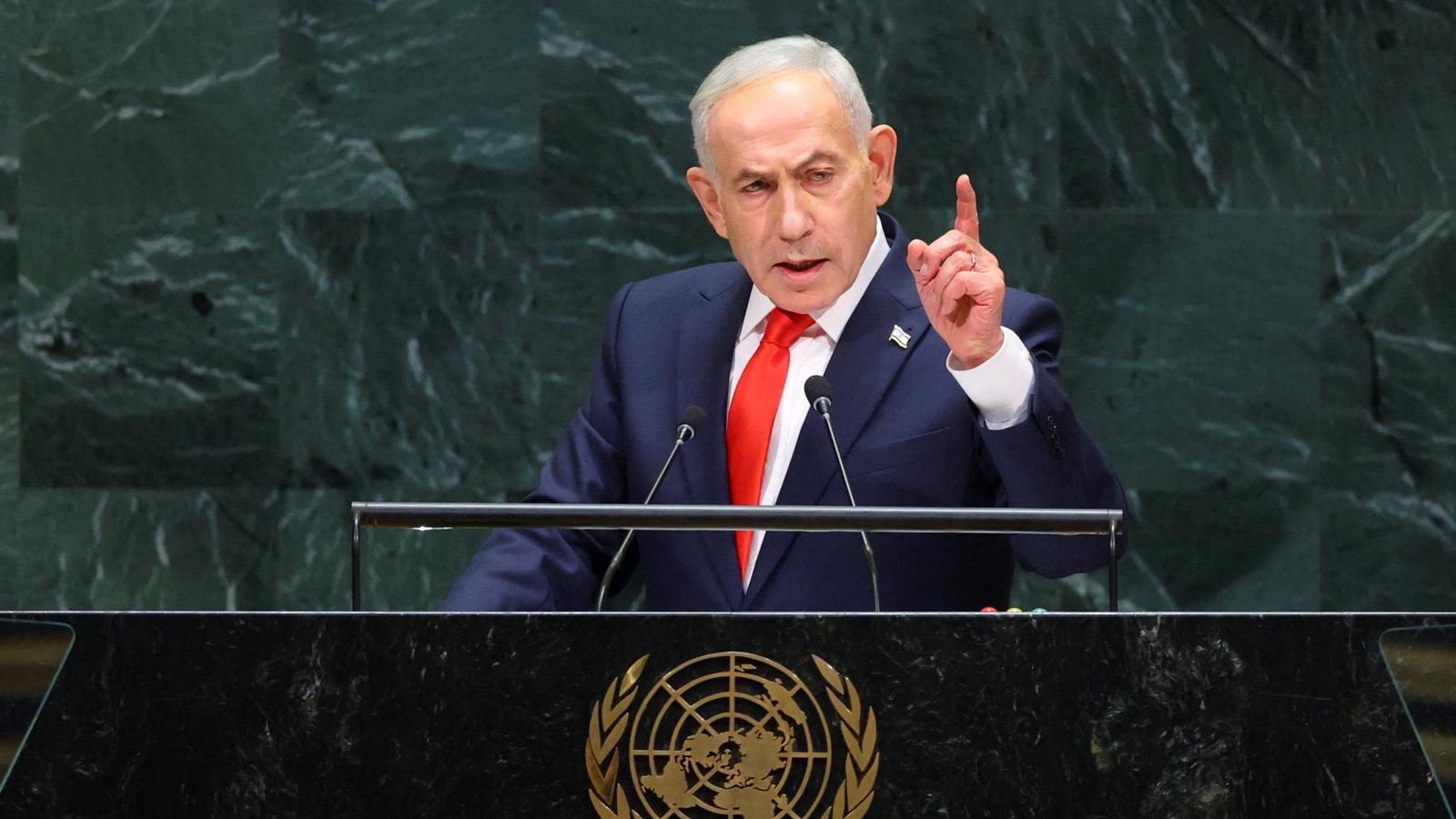
NEW YORK, September 25, 2026 — Israeli Prime Minister Benjamin Netanyahu defended Israel’s military actions in Gaza and against Iran during a speech to the United Nations General Assembly, as dozens of delegations walked out of the chamber in protest when he took the podium.
Netanyahu rejected accusations that Israel is committing genocide in Gaza and said Israel would continue its military campaign, declaring that his country had “no other choice.” He also criticised governments and leaders who have opposed Israel’s actions.
As delegates left the hall, Netanyahu described those who walked out as “moral cowards” and challenged other representatives who remained to leave as well. The walkout left significant portions of the General Assembly chamber empty as he continued his address.
Netanyahu Defends Actions Against Iran
A major focus of Netanyahu’s address was Israel’s military campaign against Iran. He defended the decision to launch attacks, arguing that Israel was acting to protect itself and other countries in the region.
Netanyahu also praised US President Donald Trump for what he described as “bold leadership” and referred to joint US-Israeli military action against Iran.
The speech came amid continuing regional conflict and diplomatic tensions surrounding Iran, Gaza and other parts of the Middle East.
Palestinian Leadership Rejects Israeli Policies
Earlier, Palestinian President Mahmoud Abbas addressed the General Assembly through a recorded video message after being denied a US entry visa.
Abbas accused Israel of pursuing policies that threaten the future of the Palestinian people, including the expansion of Israeli settlements in the occupied West Bank.
He also accused Israel of conducting a campaign in Gaza involving killings, destruction, starvation and displacement, while warning that these developments threaten prospects for a two-state solution.
Israel rejects allegations that its military campaign constitutes genocide and maintains that its operations are aimed at Hamas militants and are carried out as an act of self-defence.
Sharp Exchanges With Critics
Netanyahu used much of his speech to criticise countries and political figures that have condemned Israel’s actions.
He attacked Turkish President Recep Tayyip Erdogan, accusing him of supporting Hamas. Turkey rejected Netanyahu’s remarks, with a senior communications official saying the Israeli leader had used the UN platform for “baseless accusations” against Turkey and Erdogan.
Netanyahu also criticised New York City Mayor Zohran Mamdani, who has previously made strong accusations against the Israeli prime minister over the Gaza conflict.
Mamdani’s office subsequently rejected Netanyahu’s comments and accused him of attempting to defend Israel’s conduct in Gaza.
Growing International Pressure
The speech came as Israel faces continuing international criticism over the Gaza war and its wider military operations in the region.
The October 2023 Hamas attack on Israel killed around 1,200 people, according to Israeli figures, while 251 people were taken hostage. Israel subsequently launched a large-scale military campaign in Gaza.
According to Gaza health authorities, more than 73,000 Palestinians have been killed since the conflict began. Israel disputes allegations that its actions amount to genocide and says its military operations target Hamas.
The International Criminal Court issued an arrest warrant for Netanyahu in November 2024 over alleged war crimes and crimes against humanity related to the Gaza conflict. Netanyahu and Israeli authorities reject the allegations.
Protesters Detained in New York
The UN speech was also accompanied by protests in New York. Several demonstrators were detained by police during an unscheduled protest near the UN, including actors Susan Sarandon and Hannah Einbinder, according to reports.
Netanyahu’s address highlighted the deep divisions surrounding Israel’s military actions, with the walkout providing a visible demonstration of opposition while the Israeli leader used the UN platform to defend his government’s policies and appeal to international audiences.
The episode comes as the Middle East remains a central issue at the current UN General Assembly, with governments continuing to debate the wars in Gaza and Iran, regional security and the prospects for a broader diplomatic settlement.