Sri Lanka sets sights on 4 million tourists and US$8 billion tourism revenue by 2030
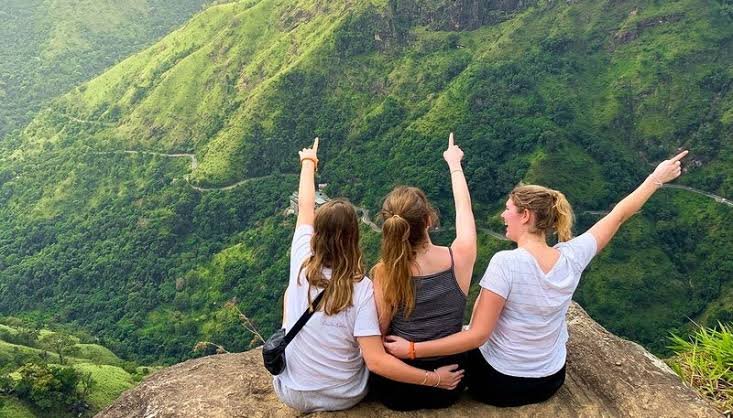
COLOMBO, September 27, 2026 — Sri Lanka is targeting four million tourist arrivals and US$8 billion in annual tourism revenue by 2030, as the Government seeks to position tourism as a stronger source of foreign exchange, employment and sustainable economic growth.
Prime Minister Dr. Harini Amarasuriya announced the targets while attending the 2026 World Tourism Day celebrations in Colombo, held under the theme “Digital Agenda and Artificial Intelligence to Redesign Tourism.”
The 2030 targets are also reflected in the Government’s 2026 Budget, which identifies tourism earnings of US$8 billion and four million annual arrivals as key sector targets.
According to the Prime Minister, Sri Lanka welcomed around 2.5 million tourists in 2024, generating approximately US$3.1 billion in tourism revenue. Tourist arrivals increased to 2,362,521 in 2025, with tourism generating around US$3.2 billion in foreign exchange earnings.
The sector has continued to attract visitors in 2026, with the country recording 1,642,215 tourist arrivals between January 1 and September 20, according to Sri Lanka Tourism Development Authority data reported by the Government.
To support the sector’s expansion, the Government has allocated Rs. 6 billion in the 2026 Budget for international digital promotional campaigns and other tourism promotion initiatives.
A further Rs. 3.5 billion has been allocated for environmentally friendly and cultural heritage projects, while Rs. 1 billion has been earmarked for airport modernisation and Rs. 500 million for human resource development.
The Government’s approach reflects a broader effort to move Sri Lankan tourism towards a more diversified and higher-value model, with greater emphasis on digital technology, sustainability, heritage and visitor experiences.
Prime Minister Amarasuriya said tourism development should not be measured solely by the number of visitors arriving in the country. Instead, the sector should contribute to wider national development while ensuring that tourism growth is environmentally sustainable and provides benefits across communities.
She also highlighted the importance of developing the industry’s human capital and encouraged schoolchildren to consider tourism as a potential career path. Plans are being developed to promote tourism awareness through school-level tourism clubs alongside upcoming education reforms.
Technology is expected to play an increasingly important role in this transformation. The 2026 World Tourism Day programme placed particular emphasis on digital transformation and artificial intelligence, reflecting the growing use of technology to improve destination marketing, visitor services and tourism operations.
Sri Lanka Tourism’s current strategic planning also identifies digital transformation, product diversification, improved connectivity and the development of areas such as wellness, nature-based, cultural and MICE tourism as important components of future sector growth.
The Prime Minister stressed that future tourism development must balance economic expansion with the protection of Sri Lanka’s natural and cultural resources.
The World Tourism Day programme was organised with the participation of several institutions, including the Western Province Tourism Board, Postgraduate Institute of Archaeology and Sri Lanka Tourism Development Authority, with a focus on accelerating the digital transformation of the tourism sector.
With the Government targeting US$8 billion in annual tourism earnings by 2030, the sector faces the challenge of not only attracting more international visitors but also increasing the economic value generated by each visitor through higher-value experiences, longer stays, diversified tourism products and greater participation by local businesses.