
Colombo Port Capacity to Increase by 1.5 Million TEUs as Sri Lanka Targets Continued Growth
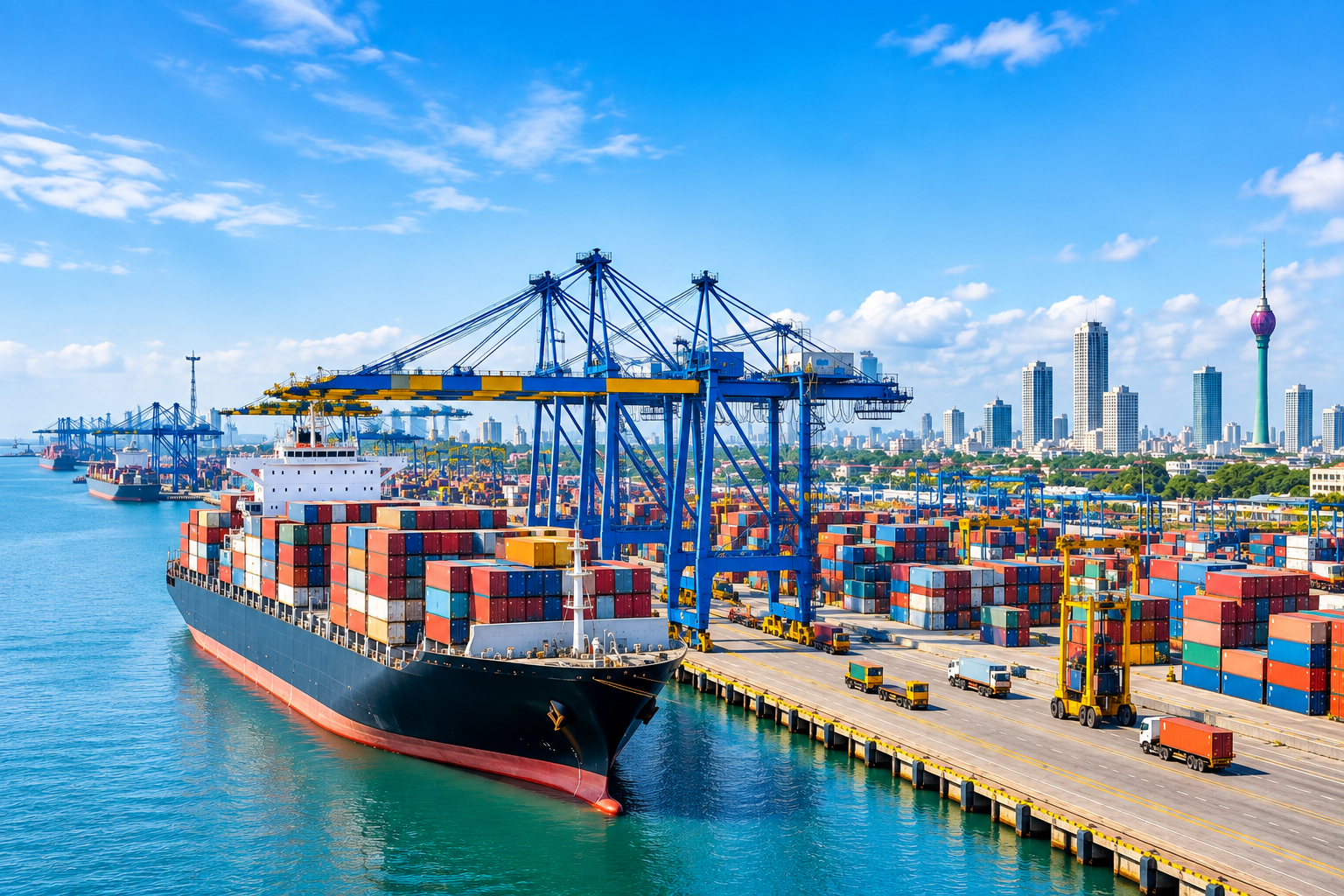
COLOMBO — Colombo Port is set to expand its handling capacity by a further 1.5 million twenty-foot equivalent units (TEUs), as Sri Lanka moves to accommodate rapidly rising container volumes and growing demand for transshipment services.
The expansion is expected to strengthen Colombo’s position as a major regional maritime hub while easing congestion that has emerged as container volumes have increased.
According to information published in the Daily FT, the Sri Lanka Ports Authority (SLPA) is investing between US$35 million and US$50 million to procure new cranes and related cargo-handling equipment.
The new equipment, including straddle carriers, is expected to become available by August/September 2027. The investment is projected to add around 500,000 TEUs to the port’s capacity.
A further 1 million TEUs of capacity is expected to come from the Adani-run Colombo West International Terminal (CWIT), bringing the total anticipated capacity increase to approximately 1.5 million TEUs.
Colombo Port facing demand pressure
The expansion comes as container traffic through Colombo continues to grow strongly.
SLPA Chairman Dr. Parakrama Dissanayake said the port is currently experiencing demand above 70% of its existing capacity, contributing to congestion.
Colombo Port currently has a capacity of approximately 10 million TEUs. The port is expected to handle around 9 million TEUs this year, according to the report.
Dissanayake said the growth in volumes is not occurring by accident, with significant increases being recorded particularly through the West Terminal.
He also noted that the port’s growth has exceeded 12%, highlighting the continued expansion of demand for Colombo’s services.
CWIT to provide another 1 million TEUs
The expansion of the Colombo West International Terminal is expected to be a major component of the capacity increase.
The Adani-led terminal is expected to add approximately 1 million TEUs of additional capacity, providing Colombo with greater room to handle rising container traffic.
Combined with the SLPA’s planned investment in new cranes and cargo-handling equipment, the developments could increase Colombo’s overall capacity by around 1.5 million TEUs.
Investment aimed at reducing congestion
The additional capacity is particularly important as shipping lines continue to increase their use of Colombo as a regional transshipment hub.
The port’s existing capacity is coming under increasing pressure as container volumes grow. Higher utilisation without corresponding investment in infrastructure and equipment can lead to vessel delays, longer container dwell times and disruptions to shipping schedules.
The planned investment in cranes and straddle carriers is therefore intended not only to increase theoretical capacity, but also to improve the port’s ability to process growing volumes efficiently.
Dissanayake said the port had become a “victim of our success,” with shipping lines maintaining close contact with the port because of its ability to provide the service levels they require.
Economic significance for Sri Lanka
The expansion has implications well beyond the port itself.
Colombo Port is a critical component of Sri Lanka’s trade and logistics economy. Higher container-handling capacity can support increased transshipment activity, attract additional shipping services and strengthen the country’s position as a logistics hub in the Indian Ocean.
Greater port capacity could also generate wider economic benefits through:
- Higher foreign-exchange earnings from port and logistics services
- Increased transshipment volumes
- Greater shipping connectivity
- Investment in logistics and related industries
- Employment growth across port-related services
- Improved supply-chain efficiency for exporters and importers
- Greater attractiveness to international shipping and logistics companies
For Sri Lanka, the timing is significant because the country’s economic recovery increasingly depends on expanding foreign-exchange-generating services and strengthening its role in regional trade.
Colombo’s regional position
The expansion also comes as Colombo seeks to maintain its competitiveness against other major ports in the region.
According to the report, Colombo has been performing strongly among global container ports, supported by sustained year-on-year growth in container handling.
Maintaining sufficient capacity will be crucial if Colombo is to continue attracting major international shipping lines and capturing transshipment business from across South Asia.
However, simply adding capacity will not be enough. The port will also need continued investment in digitalisation, customs processes, road and rail connectivity, logistics infrastructure and efficient cargo clearance to ensure that additional capacity translates into faster cargo movement.
Outlook
The planned 1.5 million TEU capacity increase represents a significant expansion of Colombo’s ability to handle future container growth.
With existing capacity approaching its limits and container volumes continuing to rise, the new investment could help prevent capacity constraints from undermining Colombo’s competitiveness.
The immediate priority, however, will be ensuring that the new infrastructure and equipment are delivered on schedule and integrated efficiently into port operations.
If successfully implemented, the expansion could strengthen Colombo Port’s role as one of South Asia’s key transshipment hubs and provide an important boost to Sri Lanka’s broader logistics and foreign-exchange economy.