Sri Lanka’s Agrifood Sector Has Major Export Potential Through High-Value Agriculture and Processing
COLOMBO, September 24, 2026 — Sri Lanka’s agrifood sector has significant potential to become a stronger driver of export growth, investment and higher-productivity employment if the country accelerates the shift towards high-value agriculture and agro-processing, according to a new study by the Institute of Policy Studies of Sri Lanka (IPS).
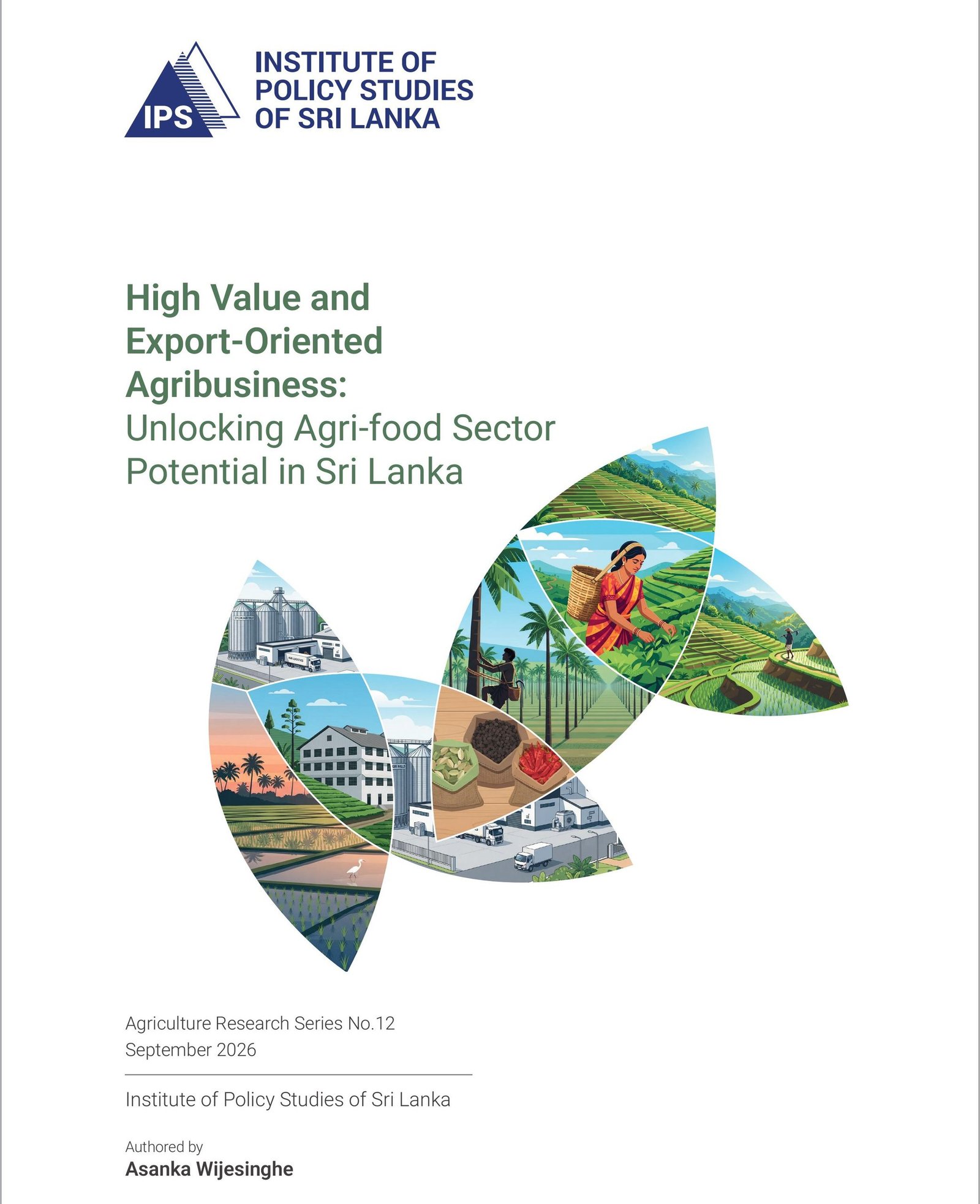
The study, titled “High Value and Export-Oriented Agribusiness: Unlocking Agrifood Sector Potential in Sri Lanka,” highlights the sector’s broader economic contribution and identifies opportunities to expand value-added production and strengthen Sri Lanka’s position in international markets.
While primary agriculture accounts for 8.3% of Sri Lanka’s Gross Domestic Product (GDP), the broader agrifood sector contributes an estimated 24.5% of GDP and 42.0% of total employment. The figures underline the sector’s importance not only to rural livelihoods but also to economic activity, industrial development and job creation.
Food Processing Offers Higher Economic Value
The research, authored by IPS Research Fellow Dr. Asanka Wijesinghe, points to food and beverage manufacturing as a particularly important area for economic transformation.
An input-output analysis conducted for the study shows that every US$1 of final demand generated by food and beverage manufacturing creates approximately US$1.85 in total economic output. By comparison, US$1 of final demand in primary agriculture generates around US$1.20 in total economic output.
The findings suggest that increasing investment in processing and value addition could allow Sri Lanka to generate greater economic returns from its agricultural production rather than relying predominantly on the export of raw or minimally processed commodities.
Dr. Wijesinghe noted that developing food processing around agricultural commodities could provide a direct pathway for the sector to move from agriculture towards industrial activity.
“Agriculture supplies 38% of food processing inputs, while food processing sources 19% of its inputs from domestic agriculture,” he said, highlighting the close relationship between agricultural productivity and the development of the domestic processing industry.
Six Export Areas Identified
The IPS study identifies six agribusiness clusters with strong potential for export-led growth: cinnamon; other spices including pepper and vanilla; coconut-based products; processed fruits and vegetables; seafood; and tea.
Coconut-related exports exceeded US$1 billion in 2025, demonstrating the potential of value-added agricultural products to generate significant foreign exchange earnings.
Fruit and vegetable processing has also recorded substantial expansion, with exports increasing by 302% over the past decade. Meanwhile, Sri Lanka’s seafood sector has benefited from preferential access to international markets, including opportunities associated with the European Union’s Generalised Scheme of Preferences Plus (GSP+) framework.
These developments point to opportunities for businesses to expand beyond traditional commodity exports and develop higher-value products targeting international consumers.
Policy and Investment Constraints
Despite the sector’s potential, the study identifies several structural constraints that could limit further expansion.
These include complex tariff structures, policy uncertainty, insufficient investment in agricultural research and development, and limited support for value-added production.
For businesses, these constraints can increase production and investment risks while making it more difficult to develop competitive export-oriented supply chains.
The IPS study therefore recommends a stronger policy focus on high-value and export-oriented agribusiness, alongside measures to improve agricultural productivity, encourage processing investment and strengthen links between farmers and industry.
Export Competitiveness in Focus
The findings come as Sri Lanka continues to seek higher export earnings and greater diversification of its production base.
Expanding agro-processing could allow the country to capture a larger share of international value chains while creating opportunities for investment in manufacturing, logistics, packaging, technology and related services.
For Sri Lanka’s agrifood industry, the opportunity extends beyond increasing agricultural output. Building competitive value-added industries around locally produced commodities could generate additional export revenue, improve productivity and support higher-value employment.
The IPS study was conducted as part of the World Bank’s Country Growth and Jobs Report and highlights high-value, export-oriented agribusiness as an important pathway for strengthening Sri Lanka’s long-term economic growth and export competitiveness.