IMF Signals Continued Support for Sri Lanka Beyond March 2027 Programme Expiry
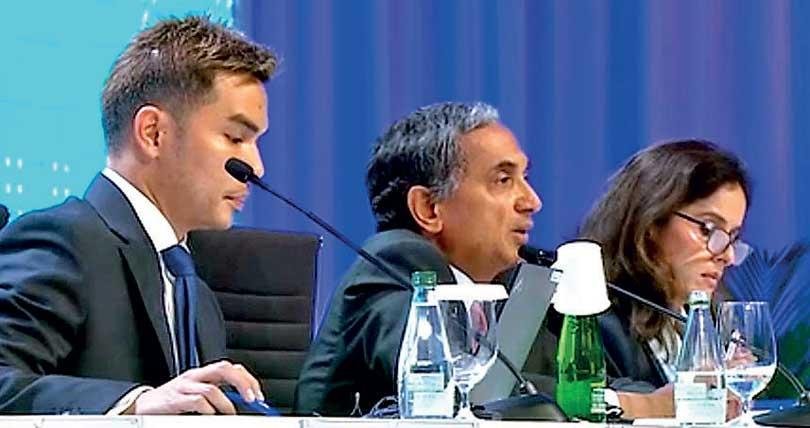
COLOMBO, October 17, 2026 — The International Monetary Fund (IMF) has signalled its readiness to continue supporting Sri Lanka beyond the expiry of its current lending programme in March 2027, while emphasising that completing the remaining reviews and consolidating economic reforms must remain the immediate priorities.
IMF Asia and Pacific Department Deputy Director Sonali Jain-Chandra said future engagement could take several forms, including a new financing arrangement, policy advice and capacity development. However, she stressed that the decision to seek another programme rests with the Sri Lankan authorities.
“There are many ways in which the IMF can support Sri Lanka, whether it’s a new financing arrangement, whether it’s granular policy advice in the context of surveillance or capacity development, of which Sri Lanka is a very significant beneficiary,” Jain-Chandra said at the Asia-Pacific Department’s Regional Economic Outlook press briefing during the IMF and World Bank 2026 Annual Meetings.
She added that the IMF remained committed to supporting Sri Lanka, with the nature of any future engagement to be discussed at an appropriate time.
Her remarks came in response to questions about whether Sri Lanka would require a successor programme, given its exposure to climate-related and oil-price shocks and the resumption of debt repayments expected in 2028.
Jain-Chandra did not indicate that a new programme was necessary or confirm that negotiations on a successor arrangement had begun. Instead, she highlighted the remaining work under the existing Extended Fund Facility (EFF), which is due to expire in March 2027.
The IMF reached a staff-level agreement on Sri Lanka’s seventh programme review in early October. The review is expected to be considered by the IMF Executive Board in the coming weeks, followed by another review mission before the programme expires.
Jain-Chandra said maintaining the focus on macroeconomic stabilisation and preserving the gains achieved through reforms would be critical during the remaining period.
IMF highlights economic recovery and reform progress
The IMF official gave a positive assessment of Sri Lanka’s performance under the programme, pointing to improvements in public finances, sustained economic growth, progress in debt restructuring and governance reforms.
“The macroeconomic situation is much improved. In contrast to other countries, the fiscal performance is actually very strong. The revenue ratio has doubled. The debt restructuring is largely complete. Growth has been positive for eleven consecutive quarters after the trough we saw during the crisis,” she said.
She also highlighted structural reforms, particularly in governance, describing them as a core component of the programme and saying the arrangement had delivered significant results.
The IMF’s assessment indicates that Sri Lanka has made considerable progress in stabilising its economy following the crisis. However, maintaining fiscal discipline, sustaining growth and protecting reform gains remain important as the country approaches the end of the current programme.
External risks remain a concern
The outlook for Sri Lanka’s post-programme economic management is complicated by renewed external pressures identified in the IMF’s October 2026 Regional Economic Outlook for Asia and the Pacific.
The report identifies Sri Lanka among the economies experiencing some of the region’s fastest increases in headline inflation following the energy shock. It attributes much of the recent regional inflation increase to higher global energy prices and, in emerging markets, currency depreciation.
Sri Lanka is also listed alongside India, Indonesia, Japan and South Korea among economies that intervened in foreign exchange markets during periods of currency volatility. The report does not specify the scale or direction of Sri Lanka’s intervention.
On the fiscal front, the report notes that Sri Lanka introduced broader measures to address the effects of the energy shock. These included fertiliser support and household relief through cash transfers and cost-of-living top-ups.
The combination of energy-price volatility, climate risks and future debt-servicing obligations highlights the importance of maintaining economic resilience as Sri Lanka transitions beyond the current IMF arrangement.
Decision on successor programme rests with government
Jain-Chandra reiterated that the IMF is prepared to remain a partner to Sri Lanka, but the decision on whether to request a new financing programme belongs to the government.
“This is the authorities’ prerogative, whether they would like to request an IMF programme,” she said.
Her comments leave open several possible forms of engagement after March 2027, without confirming a successor loan arrangement.
For Sri Lanka, the immediate priority remains completing the outstanding programme reviews and consolidating the progress achieved in fiscal management, debt restructuring and structural reforms, while preparing to manage external shocks and future debt repayments.