Oil Prices Set for Weekly Decline as Saudi Supply Concerns Ease
LONDON, September 18, 2026 — Global oil prices are heading for a weekly decline after three consecutive weeks of gains, as concerns over disruptions to Saudi Arabia’s crude exports have eased following reports of alternative shipping arrangements in the Gulf of Oman.
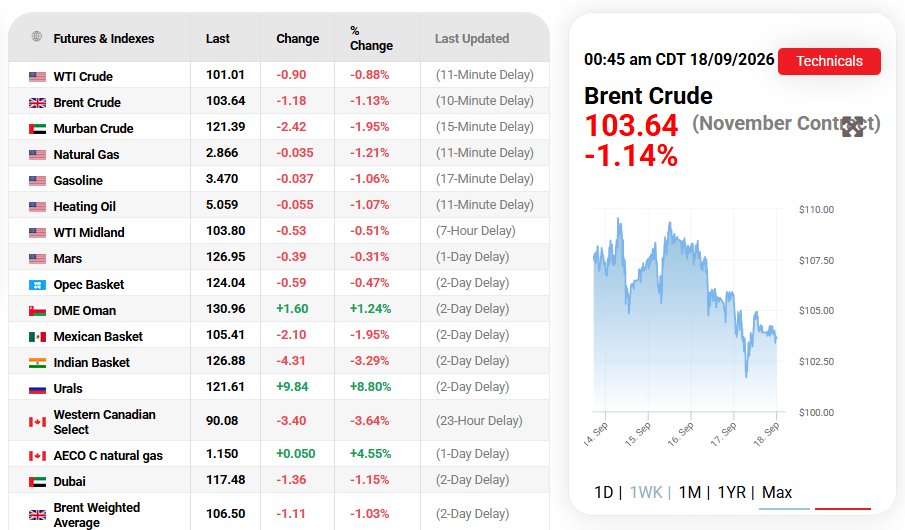
At the latest market levels, Brent crude was trading at around US$103.65 a barrel, while West Texas Intermediate (WTI) stood at approximately US$101.04 a barrel. Both benchmarks remained above the US$100 mark despite the expected weekly decline.
The elevated oil prices continue to place pressure on fuel costs and add to concerns among consumers, businesses and governments over the impact of higher energy prices.
Saudi Export Concerns Ease
Market concerns over Saudi Arabia’s crude exports intensified after Yemen’s Houthi movement reportedly attacked the East-West oil pipeline, a key route used to transport Saudi crude towards the Red Sea and international markets.
Saudi Arabia has reportedly been moving around 4 million to 5 million barrels per day through the pipeline in recent months. The disruption raised concerns over the country’s ability to maintain export volumes, particularly after several crude cargoes bound for Europe were reportedly cancelled earlier this week.
However, sentiment improved after reports indicated that Saudi Aramco had shifted some crude exports towards the Persian Gulf and was using ship-to-ship transfers off the coast of Oman.
The alternative route operates outside the Strait of Hormuz, providing Saudi Arabia with another option for moving crude to international markets.
Traders Monitor Global Supply
Further easing market concerns came after reports that Aramco could restore approximately half of the oil flows through the East-West pipeline.
A potential recovery of between 2 million and 2.5 million barrels per day would provide additional supply, although it would not completely eliminate the global shortfall created by the disruption.
Market participants are now closely watching developments around Saudi oil flows and shipping activity through the region.
“The key question is whether physical flows can normalise and what could be the timeline,” Phillip Nova analyst Priyanka Sachdeva said, according to Reuters.
She added that a sustained improvement in traffic through the Strait of Hormuz could result in some of the geopolitical premium currently built into oil prices being removed.
With both major crude benchmarks still trading above US$100 per barrel, developments affecting Middle Eastern supply and shipping routes are expected to remain a major focus for global markets.