India Approves $19 Billion Programme to Expand Renewable Energy Grid
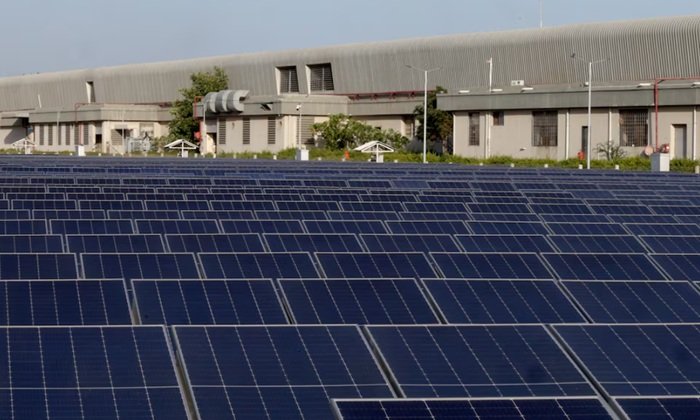
NEW DELHI, October 2, 2026 — India’s Cabinet has approved a Rs. 1.86 trillion (US$19.42 billion) investment programme to strengthen the country’s power transmission network and support the integration of up to 135 GW of renewable energy into the national grid.
The Union Cabinet, chaired by Prime Minister Narendra Modi, approved the Green Energy Corridor Phase-III (GEC-III) scheme, which will focus on expanding India’s intra-state transmission infrastructure and deploying large-scale battery storage.
The programme is designed to support India’s ambitious target of achieving 500 GW of renewable energy capacity by 2030, while strengthening the grid infrastructure required to transport electricity generated from solar and other renewable sources.
A key component of the programme is the deployment of 50 GWh of Battery Energy Storage Systems (BESS). The storage capacity will help address challenges associated with the intermittent nature of renewable energy, including fluctuations in generation, transmission congestion, peak-hour curtailment and electricity demand during non-solar hours.
The GEC-III programme is scheduled to be implemented by FY2032-33, with a total project outlay of Rs. 186,405 crore.
Of the total allocation, approximately Rs. 136,378 crore will be directed towards the development of intra-state transmission systems, while Rs. 50,000 crore will support the deployment of 50 GWh of battery energy storage.
The programme includes Rs. 54,082 crore in Central Financial Support, which the Government said would help offset intra-state transmission charges and ultimately keep electricity costs lower for consumers.
The investment is expected to play a critical role in enabling India to move large volumes of renewable electricity from generation centres to demand centres while improving the flexibility and reliability of the power grid.
Under the scheme, greenfield intra-state transmission projects will be implemented through Tariff Based Competitive Bidding (TBCB). Brownfield upgrades and network-strengthening projects will be carried out on a cost-plus basis.
State Transmission Utilities will serve as the overall implementing agencies, while Transmission Service Providers will participate through the TBCB model under a Build-Own-Operate-Maintain (BOOM) framework.
Beyond supporting the 2030 renewable-energy target, the programme is also expected to contribute to India’s longer-term goal of reaching 900 GW of installed non-fossil fuel capacity by 2035.
The Government expects the investment to strengthen India’s long-term energy security while supporting lower-carbon economic growth. The expansion is also expected to generate employment across the power, manufacturing and construction sectors, with additional opportunities emerging in battery manufacturing, energy storage deployment, grid management and infrastructure maintenance.
The large-scale expansion of battery storage could also accelerate the development of India’s domestic energy-storage industry, creating demand for technology, manufacturing and skilled services as the country increases its reliance on renewable power.
With renewable generation capacity expanding rapidly, the success of the programme will depend not only on adding clean-energy capacity but also on building the transmission and storage infrastructure needed to reliably integrate that power into India’s growing electricity system.