CBSL Survey Tracks Financial Sector Risks and Confidence in Sri Lanka’s Financial System
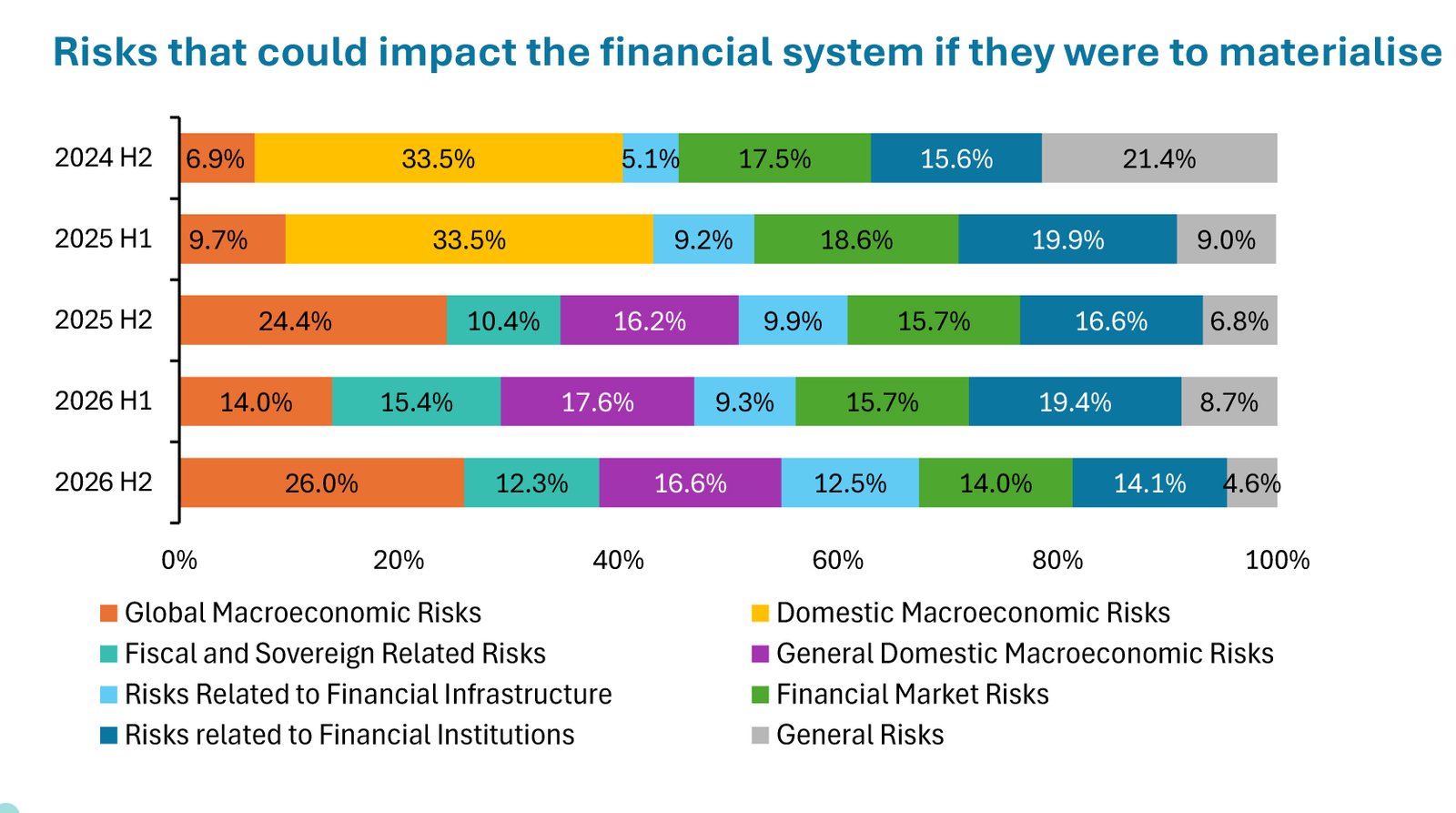
COLOMBO, October 8, 2026 — The Central Bank of Sri Lanka (CBSL) has released the key findings of its Systemic Risk Survey (SRS) for the second half of 2026, providing an updated assessment of how financial market participants view risks to the country’s financial system and their confidence in its stability.
The survey, conducted between July 17 and August 14, 2026, captures the perceptions of senior risk-management executives across a broad range of financial institutions and market participants.
The latest findings examine three key areas: overall confidence in Sri Lanka’s financial system, the sources of perceived financial risks and the likelihood of those risks materialising.
For businesses, investors and financial institutions, the survey provides an important market-based indicator of how risks facing the financial system are being assessed by industry participants, offering insights into areas that could influence financial stability and market sentiment.
The CBSL emphasised that the findings represent the perceptions of survey respondents and should not be interpreted as the Central Bank’s own assessment or official position on the risks identified.
The Systemic Risk Survey is designed to quantify and track changes in financial market participants’ views on systemic risks and their confidence in the resilience of Sri Lanka’s financial system over time.
The updated survey sample covers executives responsible for risk management across licensed banks, finance companies, primary dealers, insurance companies, unit trust management companies, margin providers and underwriters, stockbroking firms, licensed microfinance companies, credit-rating agencies, financial infrastructure providers and mobile-based e-money service providers.
The broad coverage gives the survey a cross-section of perspectives from Sri Lanka’s banking, capital-market, insurance, financing and digital financial-services sectors.
The release comes as Sri Lanka continues to strengthen financial-sector resilience and restore investor and market confidence following the country’s recent economic and financial crisis.
The latest SRS is therefore expected to provide policymakers, financial institutions and market participants with useful signals on evolving risk perceptions and areas requiring continued monitoring as the economy moves through its recovery.