IMF Pledges Continued Support for Sri Lanka as $345 Million Tranche Awaits Board Approval
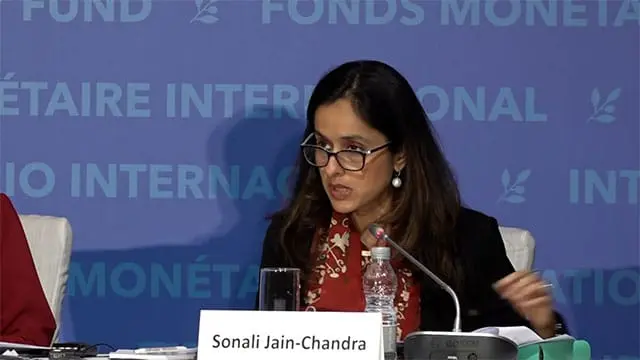
BANGKOK, October 15, 2026 — The International Monetary Fund (IMF) has reaffirmed its commitment to supporting Sri Lanka’s economic recovery, signalling continued engagement beyond the country’s current bailout programme as fiscal conditions improve and debt restructuring nears completion.
Sonali Jain-Chandra, Deputy Director of the IMF’s Asia and Pacific Department, said on Thursday that the Fund stood ready to support Sri Lanka “in any way they desired, as appropriate,” highlighting progress in macroeconomic stabilisation, fiscal management and structural reforms.
Speaking at a press conference during the IMF meetings in Bangkok, Jain-Chandra described Sri Lanka’s macroeconomic situation as significantly improved, pointing to strong fiscal performance and substantial progress in completing the country’s debt restructuring process.
She also noted improvements in structural reforms, including governance, as Sri Lanka continues efforts to strengthen economic institutions and improve public-sector accountability.
The IMF’s latest remarks follow a staff-level agreement reached earlier this month on the seventh review of Sri Lanka’s Extended Fund Facility (EFF) programme, potentially unlocking approximately US$345 million in financing.
The disbursement remains subject to approval by the IMF’s Executive Board. Once the review is completed, Sri Lanka will receive access to financing equivalent to approximately 345 million Special Drawing Rights (SDRs).
Jain-Chandra said the agreement would be considered by the IMF board in the coming weeks. Another review mission is expected before the current programme expires in March 2027.
The anticipated funding would provide additional external financing support as Sri Lanka continues to manage its debt obligations, rebuild economic resilience and maintain macroeconomic stability.
Beyond the latest disbursement, the IMF has indicated that its engagement with Sri Lanka could continue through different channels, including a potential new financial arrangement, policy surveillance and capacity-development assistance.
Such continued engagement could be important as the country works to preserve recent economic gains, strengthen public finances and address remaining structural vulnerabilities.
For investors and businesses, the IMF’s assessment offers an indication of the progress made in stabilising the economy. However, maintaining that progress will depend on continued implementation of reforms, fiscal discipline, debt sustainability and measures to strengthen governance.
The potential for a future financial arrangement also signals that discussions on international financial support could extend beyond the existing EFF programme, although no details of a new arrangement were announced.
Sri Lanka’s immediate priority remains securing IMF board approval for the seventh review and the associated financing, while sustaining the reforms underpinning its broader economic recovery.