BRICS Summit 2026: New Delhi Declaration Signals Deeper Trade, Local-Currency Payments and a More Integrated Emerging-Market Economy
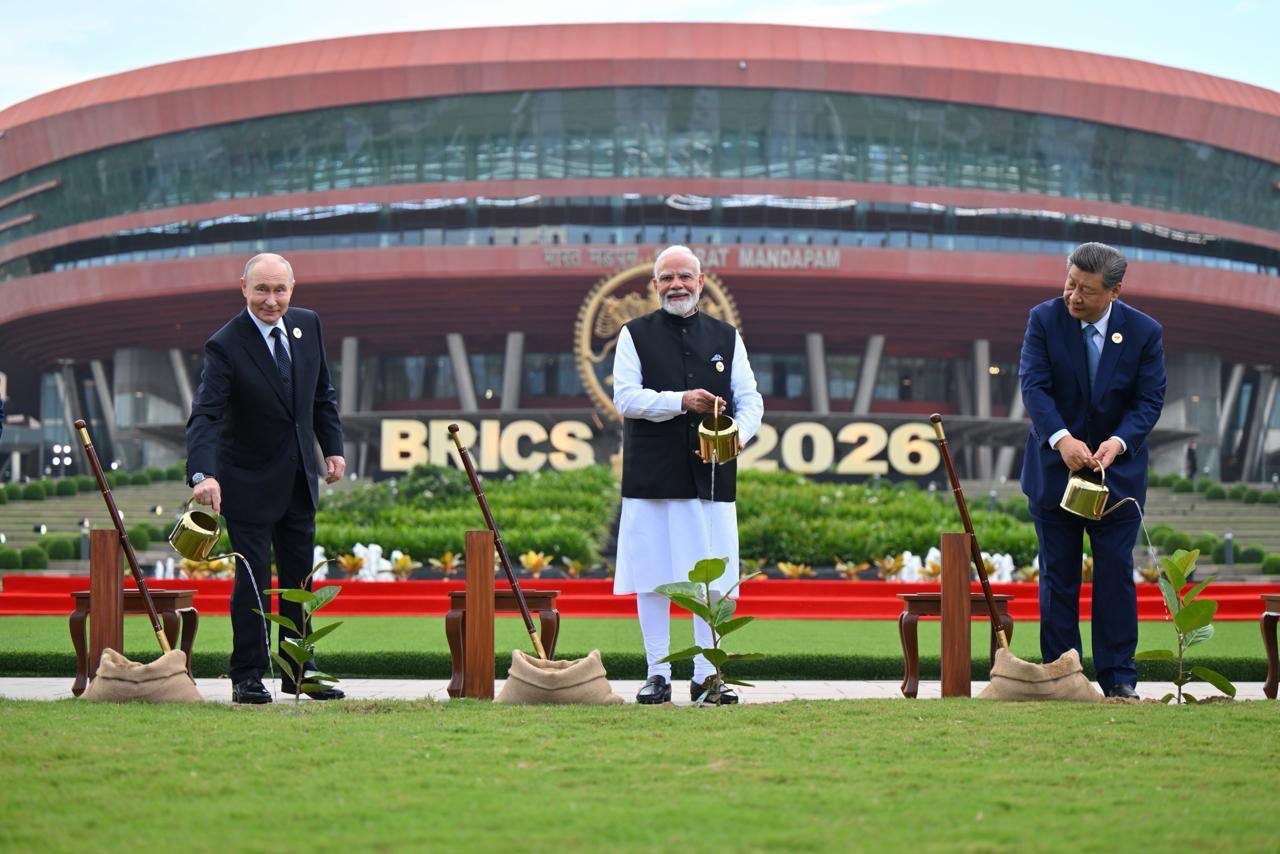
xNEW DELHI, September 13, 2026 — BRICS leaders adopted the New Delhi Declaration on Saturday, the first day of the 18th BRICS Summit, setting out a broad economic agenda aimed at strengthening trade among emerging economies, improving cross-border payments, expanding local-currency settlements and reducing vulnerabilities in global supply chains.
The summit, hosted by India on September 12–13, comes at a particularly difficult moment for the global economy, with trade tensions, sanctions, disruptions to energy markets and geopolitical conflicts increasing costs and uncertainty for businesses.
The most important economic message from the summit was not the creation of a new BRICS currency — an idea that has attracted considerable attention in recent years — but a more gradual effort to make trade and investment between BRICS economies easier without relying exclusively on the U.S. dollar.
Local currencies take centre stage
The New Delhi Declaration acknowledged work by the BRICS Payment Task Force to improve the interoperability of payment and messaging systems between member countries.
The group is examining mechanisms that could allow businesses to settle more trade and investment transactions directly in BRICS members’ national currencies.
Importantly, the declaration does not establish a common BRICS currency. Instead, it recognises that countries have different financial systems and priorities and supports a voluntary, gradual approach to local-currency settlements.
For businesses, the potential benefit is significant.
If payment systems become more interoperable, companies could eventually face lower transaction costs, fewer currency-conversion requirements and reduced exposure to disruptions in traditional international payment channels.
It could also make trade with countries such as China, India, Russia, the UAE, Indonesia and Brazil easier for companies in other emerging markets.
However, the process is likely to take years. Differences in banking regulations, currency convertibility, capital controls, financial infrastructure and monetary policy remain major obstacles.
No BRICS common currency — for now
One of the clearest signals from the summit was what BRICS did not announce.
The bloc stopped short of creating a common currency or formally declaring a strategy to replace the U.S. dollar.
Instead, the focus has shifted towards practical financial infrastructure — including local-currency settlements and interoperable payment systems.
That approach is particularly important for India, which has sought greater use of national currencies in bilateral trade while avoiding an explicit confrontation with the dollar-based international financial system.
The result is a potentially more pragmatic BRICS strategy: build alternatives first, rather than attempt to replace the dollar overnight.
BRICS pushes for stronger economic cooperation
The declaration also reaffirmed the BRICS Economic Partnership 2030, which provides a longer-term framework for cooperation in trade, investment, digital services, finance, technology and sustainable development.
The bloc said it would deepen economic cooperation and strengthen mechanisms for trade and investment among its members.
This builds on initiatives developed during India’s 2026 BRICS chairmanship, including a 2026–2030 Global Value Chains Action Plan, cooperation on special economic zones, digitisation of trade documents and principles aimed at facilitating digitally delivered services across borders.
For multinational companies, the significance could be greater supply-chain diversification.
Rather than concentrating production and sourcing in a small number of markets, businesses could increasingly use BRICS economies as interconnected manufacturing, logistics, technology and consumer markets.
Supply chains become a strategic economic issue
The summit placed considerable emphasis on building resilient supply chains.
That is increasingly important after years of disruptions caused by the pandemic, wars, sanctions, shipping disruptions and trade restrictions.
BRICS countries are seeking greater cooperation in logistics, transport and global value chains. Earlier ministerial-level agreements under India’s chairmanship included a BRICS Logistics Supply-Chain Cooperation Framework and initiatives designed to diversify markets and strengthen supply-chain resilience.
For businesses, this could eventually mean more opportunities to source components, raw materials and services from within BRICS economies.
It could also create new investment opportunities in ports, logistics, manufacturing, warehousing, digital trade infrastructure and transport networks.
MSMEs and startups could benefit
Another significant economic element is the focus on small and medium-sized enterprises.
BRICS has endorsed initiatives including an MSME cooperation portal, work on improving access to finance and a study of an invoice-discounting mechanism designed to address financing constraints faced by export-oriented businesses.
The bloc is also pursuing a BRICS Startup Innovation Fund and an incubator network intended to connect startups and innovation institutions across member countries.
If implemented effectively, these mechanisms could give smaller companies greater access to:
- Export finance
- New markets
- Technology
- Investors
- Business partnerships
- Cross-border supply chains
This could be particularly important for developing economies where smaller companies account for a large share of employment.
New Development Bank gets a larger role
The summit also reinforced the importance of the New Development Bank (NDB) as a financing institution for emerging markets.
BRICS is encouraging greater use of local currencies in development financing and wants the bank to diversify its financing sources.
That could gradually reduce the dependence of developing economies on financing denominated in major Western currencies.
For infrastructure-heavy economies, greater access to local-currency development finance could be important because it can reduce the currency mismatch created when governments borrow in dollars while earning revenue primarily in domestic currencies.
AI and digital infrastructure emerge as economic priorities
BRICS is also increasingly moving beyond traditional trade and finance.
Artificial intelligence, digital public infrastructure and technological cooperation featured prominently in the summit’s economic agenda.
The declaration supports cooperation in science, technology and innovation, while India promoted initiatives involving digital public infrastructure, industrial skills and knowledge-sharing platforms.
The economic importance of this is substantial.
BRICS economies collectively represent a large share of the world’s emerging-market consumers, manufacturers, energy producers and technology users. Cooperation in AI, fintech and digital infrastructure could create a parallel ecosystem for technological development across the Global South.
The challenge, however, will be ensuring interoperability, data security, intellectual-property protection and compatible regulations.
Energy security remains critical
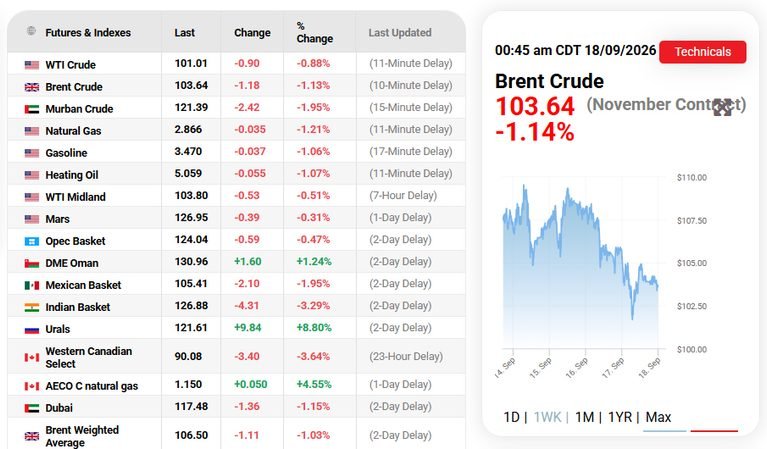
The economic agenda also comes against a backdrop of severe uncertainty in global energy markets.
BRICS members include some of the world’s largest energy producers and consumers, giving the bloc significant influence over oil, gas and other energy markets.
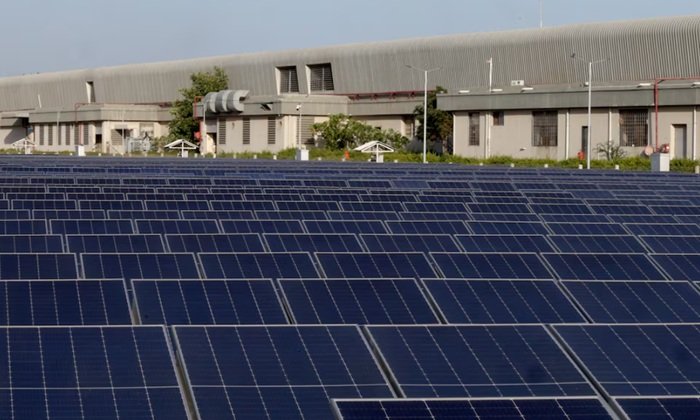
India’s BRICS programme has already produced initiatives on energy storage, smart grids and sustainable aviation fuels, while cooperation is being expanded in climate-resilient infrastructure and energy technologies.
This creates potential opportunities for investment in renewable energy, battery storage, electricity grids, clean technology and sustainable transport.
Geopolitics could directly affect the economic outlook
The economic agenda cannot be separated from the geopolitical environment surrounding the summit.
BRICS leaders expressed deep concern about escalating conflict in the Middle East and called for maximum restraint and diplomatic solutions. They also criticised unilateral tariff and non-tariff measures that they said distort international trade.
This matters economically because the Middle East is central to global energy supplies and shipping routes.
Prolonged instability could increase:
oil prices → transportation costs → production costs → inflation → interest rates → consumer demand
For emerging economies that depend heavily on imported energy, the consequences could be particularly severe.
India-China economic relations could become another important factor
On the sidelines of the summit, Indian Prime Minister Narendra Modi and Chinese President Xi Jinping discussed improving business and transport links, market access, trade imbalances and supply-chain issues.
India-China bilateral trade reached $155.6 billion in 2025, but India continues to run a very large trade deficit with China.
A sustained improvement in political relations could therefore have significant economic consequences.
Greater stability could encourage investment, improve supply-chain connectivity and expand bilateral trade. But structural trade imbalances and market-access barriers remain significant challenges.
What does this mean for the global economy?
The biggest economic significance of this year’s BRICS summit is that the organisation appears to be moving away from headline-grabbing proposals and towards incremental economic infrastructure.
Rather than attempting to create a single BRICS currency immediately, members are working on:
Local currencies → interoperable payments → trade facilitation → supply-chain integration → development finance → digital infrastructure → investment
If these mechanisms become operational, BRICS could gradually develop a more integrated economic network among emerging markets.
That would not necessarily mean the end of the dollar’s dominance. The dollar remains deeply embedded in global trade, financial markets, reserves and international banking.
But it could mean that a larger proportion of emerging-market trade can take place without direct dependence on dollar-based settlement systems.
The immediate economic impact will be limited
Despite the significance of the announcements, businesses should not expect an immediate transformation of global trade.
Most of the summit’s economic initiatives require further negotiations, regulatory changes, technical implementation and investment.
The difference between a declaration and an operational payment network, trade corridor or investment mechanism can take years.
The real test will therefore come after the summit: whether BRICS governments convert political commitments into functioning financial and commercial infrastructure.
What it means for Sri Lanka
For Sri Lanka, the developments could be particularly relevant.
Sri Lanka sits between major Indian Ocean markets and has longstanding economic relationships with several BRICS economies, particularly India, China and the UAE.
If BRICS payment and trade mechanisms become more effective, Sri Lankan companies could potentially benefit from easier transactions with major emerging-market partners.
There could also be opportunities in:
- Logistics and port services
- Tourism
- Apparel and manufacturing
- Agricultural exports
- IT and digital services
- Renewable energy
- Infrastructure
- Trade finance
- Supply-chain services
Sri Lanka could also benefit from positioning itself as a logistics and services bridge between South Asian, Middle Eastern and wider BRICS markets.
However, the country would need competitive exports, reliable infrastructure, predictable regulation and strong trade relationships to capture those opportunities.
The bigger picture
The 2026 BRICS summit did not produce a dramatic financial revolution.
Instead, it produced something potentially more consequential over the long term: a roadmap for deeper economic integration among major emerging economies.
The bloc is attempting to build greater resilience in trade, payments, finance, technology, energy and supply chains while pushing for greater representation of emerging economies in institutions such as the IMF and World Bank.
For global businesses, the message is clear: BRICS is increasingly becoming an economic platform, not simply a geopolitical grouping.
The impact will depend on implementation. If payment interoperability, local-currency settlement, supply-chain cooperation, development finance and digital infrastructure move from policy documents into functioning systems, the economic architecture of the Global South could gradually become more interconnected — and somewhat less dependent on traditional Western financial channels.
For now, the most important development is not a new BRICS currency. It is the construction of the infrastructure that could make one day-to-day trade less dependent on the dollar.