US Forces Complete Iraq Withdrawal, Raising Concerns Over Iran’s Growing Influence
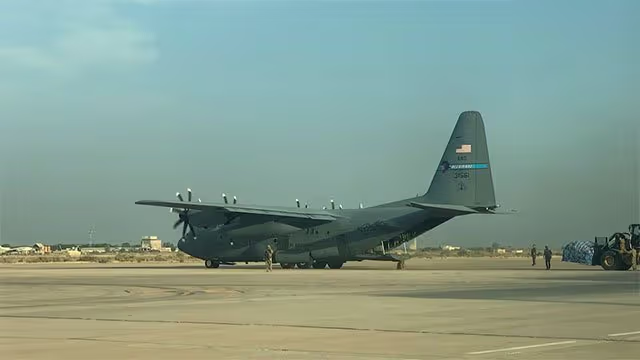
BAGHDAD, September 30, 2026 — The United States is completing the withdrawal of its forces from their remaining bases in Iraq, ending more than two decades of American military presence and raising concerns that the move could expand Iran’s influence while creating new security challenges for Baghdad.
The withdrawal, agreed in 2024 under former US President Joe Biden and carried out under President Donald Trump, is being welcomed by Iran and its allied groups as a major victory. But Iraqi security officials and analysts warn that the departure could create a vacuum that Tehran-backed militias and remnants of Islamic State may seek to exploit.
The United States invaded Iraq in 2003 to overthrow Saddam Hussein and subsequently fought a prolonged insurgency before withdrawing in 2011. American forces returned in 2014 as part of an international campaign to help Iraqi forces defeat Islamic State.
More than 4,500 US service members have died during the two decades of American military involvement in Iraq.
Iran Sees Strategic Gain
Iraq has maintained unusually close political and security relationships with both Washington and Tehran, despite the rivalry between the two powers.
The departure of US forces removes an important military counterweight to Iran’s influence over Iraq, according to Iraqi security analyst Jasim al-Bahadli.
He said Iran-backed armed groups were likely to portray the withdrawal as a victory and could seek greater influence over Iraq’s security and political decision-making.
Iranian officials have similarly welcomed the move, describing the departure of American troops as a success for the regional network of Iran-aligned groups.
The withdrawal comes against the backdrop of a wider conflict between the United States and Iran, increasing the strategic significance of the American exit from Iraq.
Concerns Over Security Vacuum
While the withdrawal has broad support among Iraqis who favour greater national sovereignty, some security figures argue that Iraqi forces may not yet be fully prepared to operate without American military support.
Abdulrahman al-Zobaie, a Sunni tribal leader from Fallujah, said Iraqis wanted full sovereignty but warned that an abrupt reduction in international military support could create a security vacuum.
The United States has provided Iraqi forces with intelligence, logistical assistance and air capabilities, particularly during operations against Islamic State.
Some Iraqi and Kurdish security officials now fear that the loss of those capabilities could make it harder to detect and contain militant activity.
Islamic State Threat Remains
Although Islamic State lost its territorial control in Iraq nearly a decade ago, the militant organisation continues to maintain sleeper cells capable of carrying out attacks.
Kurdish commander Sirwan Barzani said security forces had observed increased movement by Islamic State sleeper cells following reports of the international coalition’s planned withdrawal.
Iraqi security officials have also reported an alleged Islamic State plot to launch suicide attacks around the time of the US withdrawal.
Security officials warn that the group could use the changing security environment to demonstrate that it remains capable of carrying out deadly attacks.
At its peak, Islamic State controlled large parts of Iraq and Syria and carried out widespread violence before its territorial defeat.
End of a Long US Military Presence
The US military presence in Iraq has been marked by periods of occupation, counterinsurgency and cooperation with Iraqi forces.
Washington’s relationship with Baghdad has also been complicated by tensions between the United States and Iran. In 2020, the US killed Iranian commander Qasem Soleimani in a drone strike near Baghdad airport, triggering heightened tensions and retaliation against American interests in Iraq.
During the latest regional conflict, American service members were also killed in Iraq, underscoring the continuing risks faced by US forces operating in the country.
The completion of the withdrawal therefore represents a major turning point for Iraq and the wider Middle East.
For Baghdad, the challenge will be to strengthen its own security institutions while preventing either Iran-backed armed groups or Islamic State from exploiting the reduced US military presence.
For Tehran, the departure removes a major American military presence from a country that has long served as an important arena in the US-Iran rivalry.
The immediate consequences will depend on whether Iraq can maintain security and political stability without the military capabilities previously provided by the US-led coalition.