IPS Outlines Sectoral Reforms to Put Sri Lanka on a Durable Growth Path
COLOMBO, September 23, 2026 — Sri Lanka needs to move beyond crisis management and accelerate structural reforms across trade, taxation, human capital, social protection, agriculture, regional development and renewable energy to secure stronger and more durable economic growth, according to the Institute of Policy Studies of Sri Lanka (IPS).
The recommendations, drawn from recent IPS research and its forthcoming flagship report Sri Lanka: State of the Economy 2026, come as the economy continues to recover from a series of external and domestic shocks while facing fresh risks from oil price volatility and climate-related disruptions.
IPS said strengthening the foundations of the economy would be critical if Sri Lanka is to achieve its 7% medium-term growth target.
Trade Reform Key to Export Growth
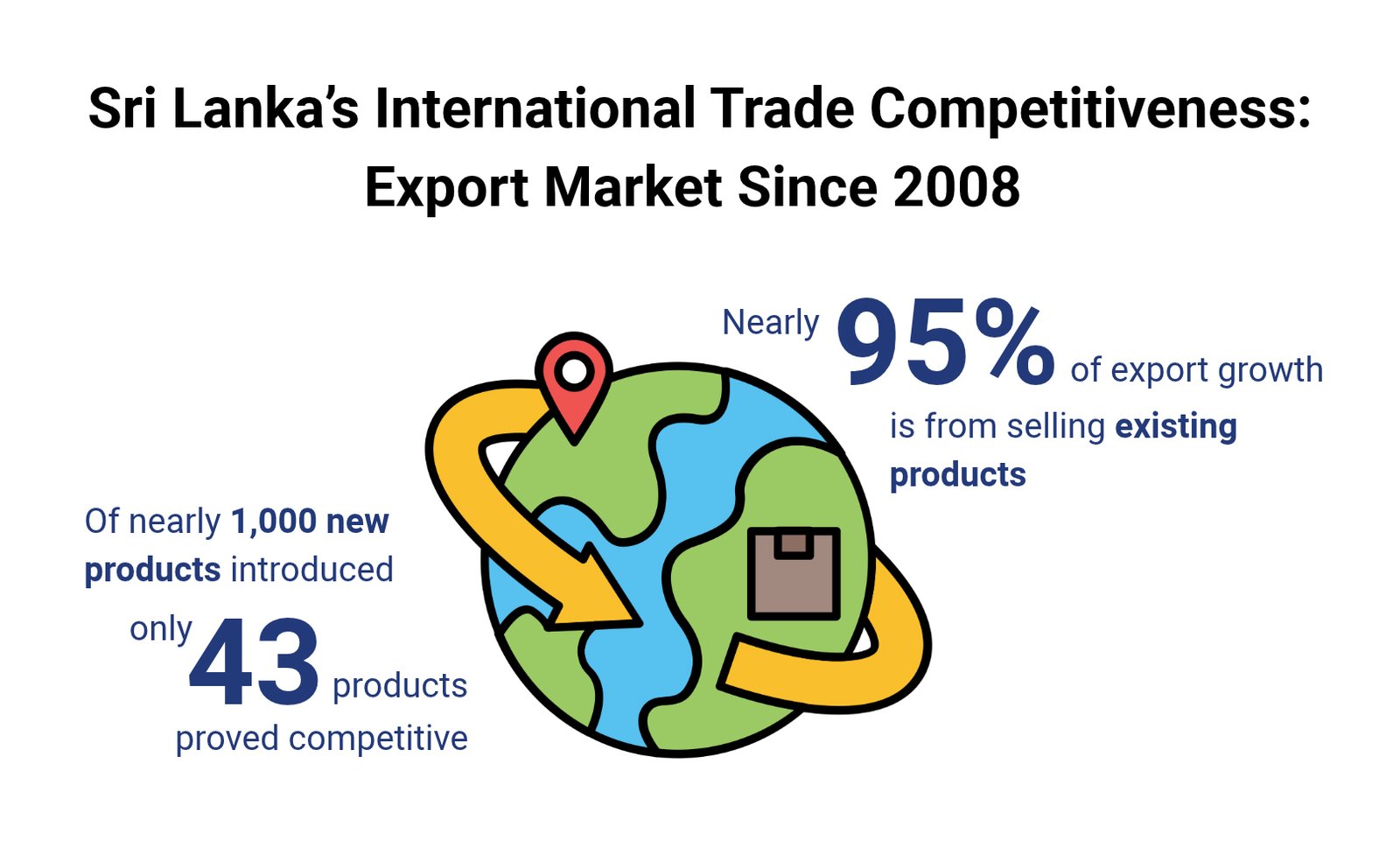
IPS research shows that almost 95% of Sri Lanka’s export growth since 2008 has come from selling larger volumes of existing products, highlighting the limited diversification of the country’s export base.
Of nearly 1,000 new products introduced during the period, only 43 achieved competitive status, underscoring the challenges facing Sri Lanka in developing new export industries.
IPS recommends strengthening international trade competitiveness through greater product diversification and deeper access to major markets.
The think tank warned that Sri Lanka’s reliance on non-reciprocal preferential arrangements such as GSP+ leaves exporters vulnerable to changes in eligibility and compliance requirements, while competitors such as India and Indonesia benefit from reciprocal trade agreements with the European Union and United Kingdom.
IPS said Sri Lanka should consider pursuing trade agreements with the United States where these can secure favourable and predictable tariff conditions.
However, domestic trade policy reforms should come first. IPS recommends simplifying the tariff structure, removing para-tariffs and reducing cascading tariff effects.
The institute also called for a trade adjustment assistance programme to support small and medium-sized businesses and workers affected by greater import competition following tariff reforms.
Fiscal Reform Must Protect Stability
IPS said fiscal policy must balance debt sustainability and macroeconomic stability with the need to restore investment in productivity-enhancing sectors.
Government revenue increased from 8.2% of GDP in 2022 to 16.6% in 2025, but Sri Lanka’s tax system remains heavily dependent on indirect taxation, with a direct-to-indirect tax ratio of approximately 40:60.
Meanwhile, public investment declined from around 5% to 3% of GDP during the fiscal adjustment process.
IPS does not recommend further broad tax rate increases at this stage, while arguing that tax cuts would also be premature given weaknesses in compliance, informality and tax exemptions.
Following the conclusion of the current IMF programme in 2027, revenue policy should increasingly focus on broadening the tax base, improving compliance among self-employed and high-income earners, reducing exemptions and digitalising tax administration.
The institute also recommends stronger expenditure management, particularly by improving project appraisal, implementation, monitoring and evaluation, while making public procurement more transparent and competency-driven.
Skills and Social Protection Central to Growth
IPS identified human capital development as another major foundation for long-term productivity.
Although Sri Lanka has a relatively large share of knowledge workers compared with regional peers, only 34.1% possess tertiary qualifications, limiting the country’s capacity to drive innovation and improve productivity.
IPS recommends directing public higher-education funding toward identified skills shortages, particularly through short-cycle tertiary programmes, technical education and STEM fields.
The institute also highlights the need for incentives to encourage skilled workers to remain in Sri Lanka.
At the same time, IPS calls for a stronger shock-responsive social protection system, particularly as climate-related risks increase.
Among the poorest 20% of households, coverage under Aswesuma was estimated at just 55% for those most exposed to shocks, compared with 63% among the least exposed.
IPS recommends strengthening the Integrated Welfare Management System and developing a dynamic social registry linked to disaster-risk and climate data, allowing assistance to reach vulnerable households more rapidly following major shocks.
Tackling Informality and Population Ageing
Labour informality remains another major structural challenge, with around 66.5% of employment classified as informal in 2024.
IPS recommends lowering the cost of formalisation while increasing penalties for non-compliance, particularly among micro and small enterprises.
Simplified taxation, digital registration and fair contribution systems could encourage businesses and workers to enter the formal economy, while better access to credit could provide an additional incentive.
The institute also highlights Sri Lanka’s rapidly ageing population as both a challenge and an economic opportunity.
The share of people aged 60 and above is projected to increase from 12.4% in 2012 to 23.1% by 2042.
IPS recommends expanding primary healthcare, geriatric services, chronic disease management and rehabilitation so older Sri Lankans can remain economically active for longer while reducing healthcare-related financial pressures.
Agriculture and Regional Growth Need Greater Investment
IPS said improving agricultural productivity and developing stronger value chains will be essential for raising rural incomes and strengthening climate resilience.
Sri Lanka’s agricultural total factor productivity has grown by only around 0.3% annually over the past decade, compared with 1.6% across South Asia.
The institute recommends greater investment in post-harvest management, storage, refrigeration, processing, certification and market access, supported through grants, loans, guarantees and targeted tax incentives.
Stronger connections between SL-GAP-certified farmers, processors, supermarkets, exporters and institutional buyers could also help translate certification into higher-value market opportunities.
IPS further called for greater regional infrastructure investment to reduce Sri Lanka’s economic concentration in the Western Province.
The Western Province generates around 42% of national GDP, while the absence of strong secondary cities and industrial clusters elsewhere limits opportunities for more balanced regional development.
Tax incentives, land access and other measures could encourage businesses to establish operations in secondary cities and regions with improving transport and logistics infrastructure.
Renewable Energy Transition Needs Stronger Infrastructure
IPS also identified renewable energy as critical to Sri Lanka’s competitiveness and resilience against external shocks.
While renewable generation capacity has expanded, the institute said transmission infrastructure, electricity-market design, financing mechanisms and digital systems have not developed at the same pace.
It recommends ring-fencing investment in transmission infrastructure and securing dedicated multilateral financing, supported where necessary by sovereign guarantees.
Greater transparency around long-term fiscal commitments arising from power purchase agreements and other electricity-sector arrangements is also needed to strengthen investor confidence.
IPS said Sri Lanka’s next phase of economic development will require a shift from short-term crisis management toward coordinated structural reforms that raise productivity, diversify exports, strengthen human capital and spread growth more evenly across the country.
The institute emphasized that these reforms will be crucial for building an economy capable of sustaining higher growth while remaining resilient to future external, fiscal and climate-related shocks.